problems you can only outgrow
I recently read this quote from Carl Jung:
The greatest and most important problems of life are all in a certain sense insoluble… They can never be solved, but only outgrown.
It stayed with me because it matched a feeling I’ve had lately. I used to believe every problem had a solution and that there was always an end goal you could reach by following the right path. I still think that’s sometimes true. But there are also times when the wiser move is not to solve a problem on its own terms, but to stop organizing your life around it and pursue something ambitious enough that the old problem loses its authority.
This leads me to two broad kinds of problems.
The first kind is bounded. The problem has clear edges, and somewhere within those edges is a solution. A car breaks down; you find the fault and repair it. The problem is separate from you. Once you solve it, it disappears.
The second kind is more freeform. The problem cannot be separated from the person experiencing it because that person is part of its structure. You don’t solve it directly. You shift. You grow past it, sometimes through time, but more often through experience, changed surroundings, or a change in identity.
In that sense, I wouldn’t even call these problems so much as experiences. They force your identity to change, or push your consciousness to move. You may spend years trying to solve the feeling that you are behind, incapable, or living the wrong life. But sometimes no explanation settles it. The feeling disappears only when you become someone whose life is no longer organized around that question.
To “solve” these problems, you need a larger horizon: a new set of goals capable of replacing the old ones. The pressure itself is not necessarily evidence that something has gone wrong. Sometimes it is the first sign that your present identity has become too small for what you are beginning to see.
I picture it as thick fog surrounding you, suddenly evaporating and revealing a horizon that was there the whole time. Much of that fog is made up of yourself: personal limits inherited from parents, relatives, close friends, or simply the people you spend most of your time with.
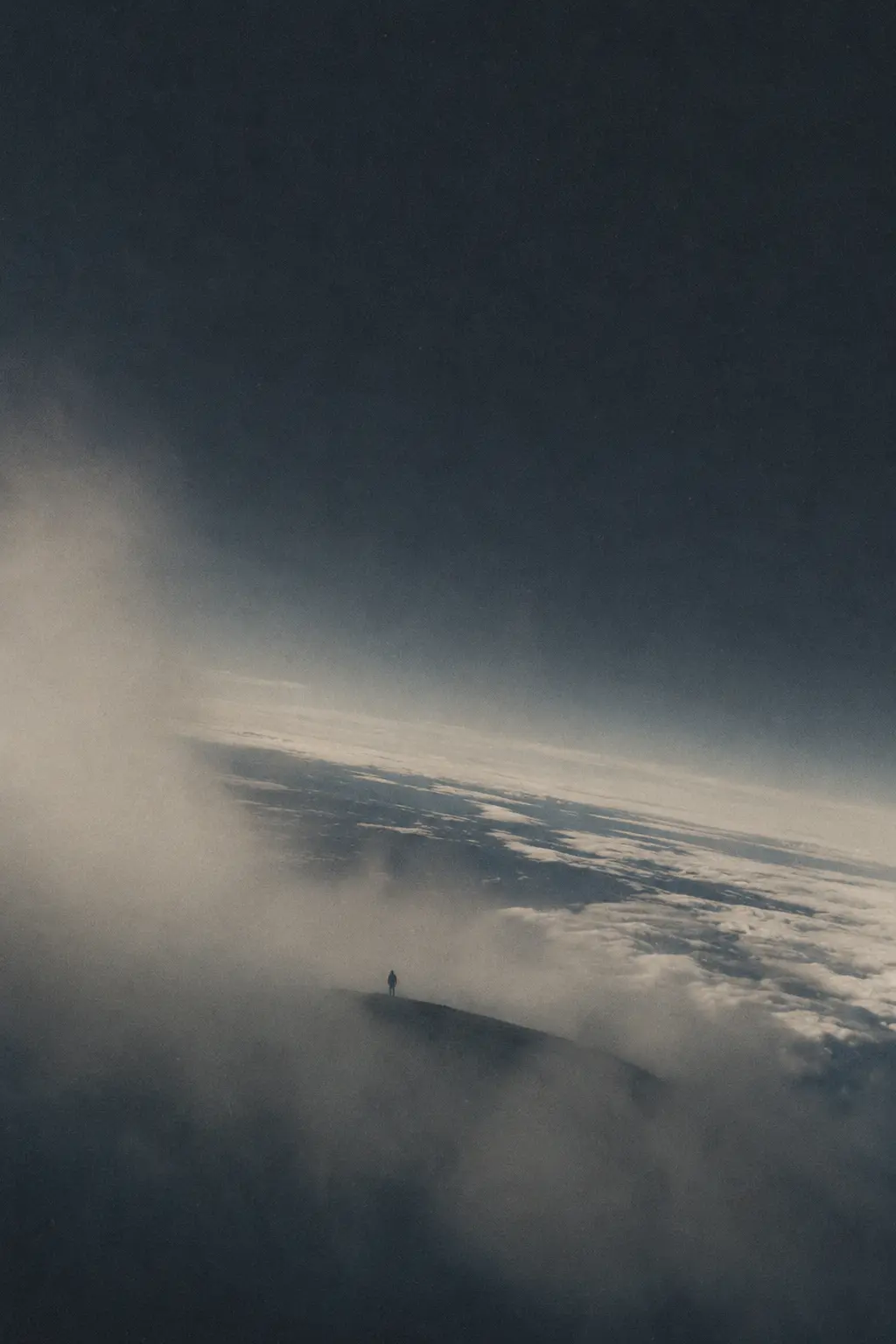
the horizon was there the whole time
You copy what is near you, not only people’s behavior, but their sense of scale. Their idea of what is possible becomes your idea of what is possible. This is why spending even a week around inspiring people can push you past limits you couldn’t otherwise outgrow. When the people around you treat your imagined limits as ordinary obstacles, some of those limits begin to look strangely artificial.
Think of your mind like an operating system. When you were born, certain defaults were already installed. As you grew up, you absorbed more from your family, friends, and surroundings, mostly before you were capable of examining them. Some of these programs protect you. Some constrain you. Others keep running long after the conditions that created them have disappeared.
Now that you’re an adult, you can begin examining what you’ve been running. You can decide what still belongs to you, what was inherited, and what has quietly become a self-imposed limit. The moment you realize this, it feels as if a new path opens up and the fog begins to thin.
The first time this landed for me, I felt it with an unsettling kind of clarity. It wasn’t motivation or fantasy. The point was simple: identity is more permeable than it feels from the inside.
You can change it by changing the input: what surrounds you, what matters to you, what you pay attention to, and what you decide to build. Eventually, the person receiving those inputs changes too.
The person you are today is the recipe that reproduces the life you live every day. Your thoughts and actions are its ingredients and method. Change the recipe, and you change yourself.